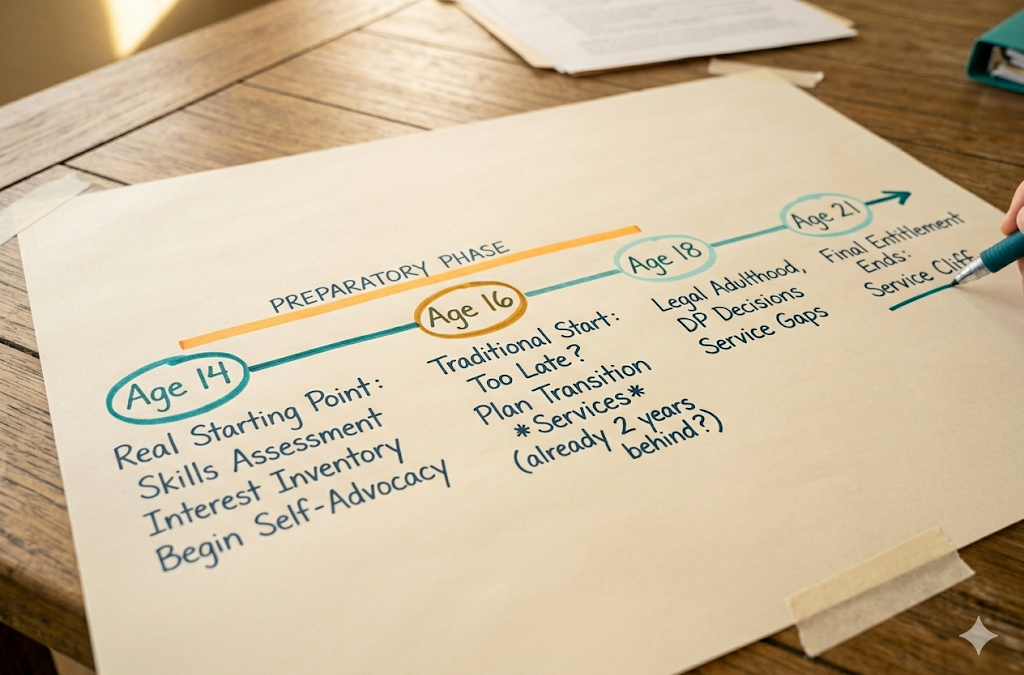
If your child with a disability is entering middle school or approaching high school, and the transition conversation hasn’t started yet, you are not behind, but you are about to be unless you act now. I have worked with families whose children arrived at 18 without the vocational assessments, community-based instruction, or post-secondary connections they needed, not because anyone was negligent, but because the planning started too late to build anything meaningful. Two years is a very short runway for a life transition.
IDEA requires that transition planning be included in the IEP by age 16. Arizona follows this floor. But the most effective transition plans I have seen begin at 14, and in many cases the difference between a genuine transition and a checklist is exactly those two years. Here is what the law requires, what best practice looks like, and how to make sure your child’s transition IEP actually prepares them for the life they want.
What Transition Services Are and Why They Are Different
Transition services under IDEA are a coordinated set of activities designed to prepare a student with a disability for post-secondary education, vocational training, employment, independent living, and community participation. They are distinct from the academic and therapeutic services in the rest of the IEP in two important ways.
First, they must be based on the individual student’s needs, taking into account their strengths, preferences, and interests. The student’s own voice is legally required to be part of the transition planning process. A generic “employability skills” curriculum applied to all students is not a compliant transition plan.
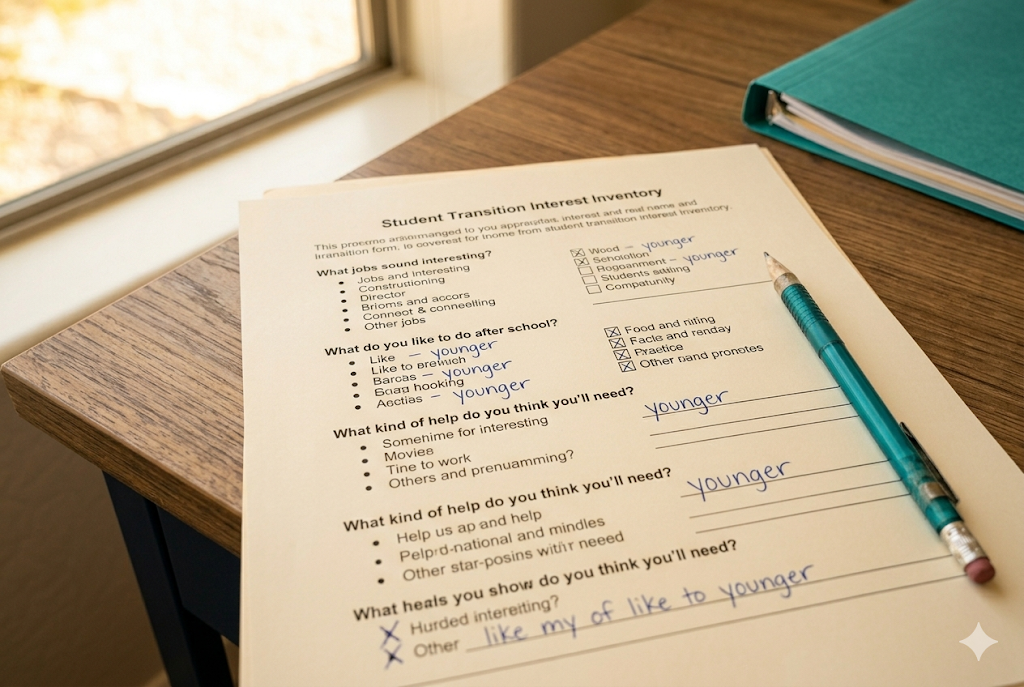
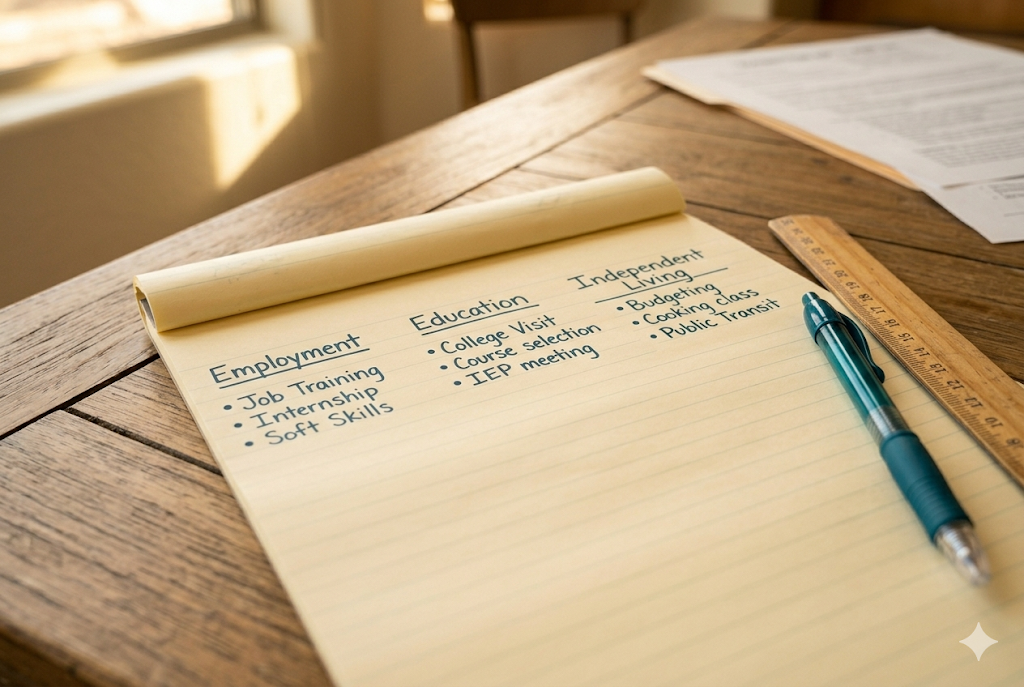
Second, the measurable post-secondary goals in a transition IEP must be based on age-appropriate transition assessments. These assessments look at the student’s current functioning across employment, education, and independent living domains and are used to develop goals that are genuinely achievable and connected to the student’s actual aspirations.
What the Law Requires in Arizona
Under IDEA, by the time a student with a disability turns 16, their IEP must include measurable post-secondary goals in the areas of education/training, employment, and where appropriate, independent living skills. The IEP must also identify the transition services, including courses of study, needed to support the student in reaching those goals.
Arizona requires that transition services be discussed at the IEP meeting, that age-appropriate transition assessments be completed, and that the student be invited to participate in their IEP meeting when transition planning is on the agenda. If the student cannot attend, the district must document how the student’s preferences and interests were incorporated into the plan.
Arizona also maintains eligibility for special education services through age 21, provided the student has not graduated with a regular diploma. This extended eligibility is critical for families considering alternative diploma pathways or students who need continued services into early adulthood.
Why 14 Is the Real Starting Point
Transition planning at 16 leaves approximately two years of high school to accomplish what should take four. Here is what you lose when you start late.
Age-appropriate transition assessments are the foundation of a good transition plan. These include interest inventories, vocational evaluations, adaptive behavior assessments, and community-based situational assessments. Completing them before 9th grade means the data actually informs course selection, elective choices, and work-based learning opportunities throughout high school. Starting at 16 means you are retrofitting a plan onto a high school career that’s already half over.
Community-based instruction, which teaches skills in real-world settings rather than simulated classroom environments, takes time to coordinate and implement. Work-based learning programs, internships, and job shadowing partnerships through the school require lead time to set up. If your child needs vocational training or wants to access Arizona’s Division of Developmental Disabilities services before leaving school, those partnerships take time to build.
For students considering post-secondary education, disability services at community colleges and universities require documentation and often their own intake processes. Starting the conversation about disability disclosure, self-advocacy, and college disability services at 14 rather than 17 means your child has time to develop these skills before they need to use them independently.

How to Advocate for Earlier Transition Planning
If your child is 13 or 14 and the IEP team has not discussed transition, raise it yourself at the next meeting. You can request that the team address transition goals and post-secondary vision as part of the annual review, even if the student is technically not required to have a transition plan yet. Most Arizona IEP teams will be receptive to this, especially if you frame it around the student’s strengths and interests rather than as a compliance concern.
Ask specifically about transition assessments. Request that the district conduct an age-appropriate transition assessment before the next IEP meeting. This is a reasonable request that creates the data foundation for everything else in the transition plan.
Ask about the course of study. The IEP must identify the courses the student will take that support their transition goals. This is often treated as a formality, but it shouldn’t be. If your child wants to pursue post-secondary education, their high school course sequence matters. If they want to pursue vocational training, elective selection and work-based learning matter. These decisions start in 9th grade, and they should be made with the transition plan in mind.
The Student’s Voice: What the Law Requires and Why It Matters
IDEA’s requirement that the student’s preferences and interests be incorporated into transition planning is not ceremonial. Transition plans built around a student’s actual interests, goals, and self-identified strengths have better outcomes than plans built entirely by adults making assumptions about what is realistic.
I have seen transition plans where the post-secondary employment goal was “work at a grocery store” for a student who had clearly communicated an interest in technology and had been writing code as a hobby for two years. That disconnect between what the student wanted and what the plan said was not accidental. It was the result of a planning process that treated the student as a passive recipient of services rather than a participant in their own future.
Your child’s voice in the transition planning process is not just a legal requirement. It is the mechanism through which the plan becomes something they actually want to work toward, rather than a document that satisfies compliance and sits in a file.
What a Strong Transition IEP Actually Looks Like
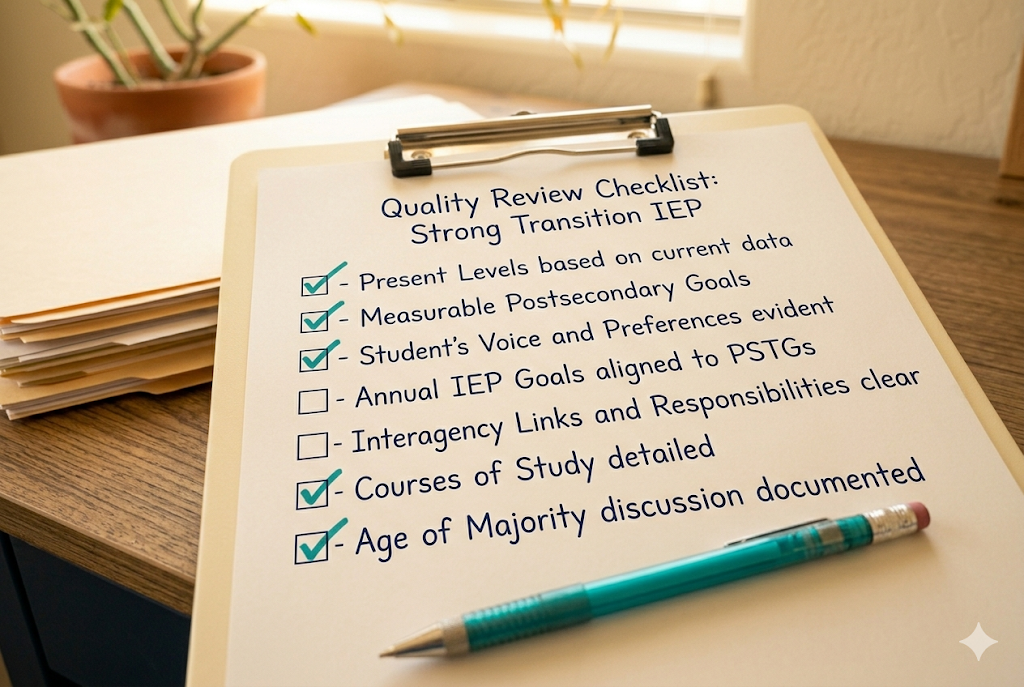
A compliant transition IEP includes measurable post-secondary goals. A genuinely useful transition IEP includes specific, individualized services that actually build toward those goals. The difference between the two is often the difference between a student who leaves school prepared and one who leaves with a diploma and nowhere to go.
Look for these elements in your child’s transition plan:
- Post-secondary goals that reflect the student’s actual preferences, not generic aspirations
- Transition assessments that are current and assess the domains relevant to the goals
- A course of study that connects to the post-secondary goals
- Specific transition services (not just a list of existing IEP services relabeled as transition)
- Agency linkages, such as connections to Arizona’s Division of Developmental Disabilities, Vocational Rehabilitation, or community programs, where appropriate
- A plan for how the student will develop self-advocacy skills
- Evidence that the student’s input was incorporated and documented
If your child’s transition plan does not include these elements, you have grounds to request revisions at the next IEP meeting. A transition plan that is technically compliant but practically useless is worth challenging.
Frequently Asked Questions About Transition IEP Planning
What is the difference between a transition goal and a regular IEP goal?
Regular IEP goals address current academic and functional performance. Transition goals, specifically post-secondary goals, address what the student will do after leaving high school: where they will live, work, and pursue education or training. Transition goals in the IEP drive backward planning, meaning the current services and course of study are designed to help the student eventually achieve those post-secondary outcomes.
Does my child have to attend their own IEP meeting for transition planning?
The district is required to invite the student to any IEP meeting where transition planning is on the agenda. If the student cannot attend or chooses not to, the district must document how the student’s preferences and interests were incorporated in their absence. Attendance is not mandatory but is strongly encouraged. A student who understands their own transition plan is far more likely to advocate for themselves after leaving school.
Can transition goals include college preparation even if the school thinks my child is not "college-bound"?
Yes. IDEA requires that transition planning reflect the student’s actual interests and preferences. If your child expresses interest in post-secondary education, the IEP team cannot categorically exclude that as a post-secondary goal based on assumptions about academic ability. The goal must be based on assessment data and the student’s own aspirations, not on what the team predicts is realistic.
What is Arizona Vocational Rehabilitation and how does it connect to transition planning?
Arizona Vocational Rehabilitation (AZ DES Vocational Rehabilitation) is a state agency that provides employment-related services to individuals with disabilities, including job training, placement assistance, and education funding. Students with IEPs can be referred to vocational rehabilitation while still in high school, ideally by age 16. A “pre-ETS” (Pre-Employment Transition Services) referral can be made through the school. Building this connection before the student exits school is a best practice that is frequently overlooked.
What happens to my child's IEP services if they do not graduate at 18?
In Arizona, students with disabilities retain IDEA eligibility through age 21, provided they have not graduated with a regular high school diploma. This extended eligibility allows students to continue receiving special education and related services, including transition services, until their 22nd birthday or graduation. Alternative diploma pathways (such as a Certificate of Completion) do not extinguish IDEA eligibility, though this is a nuanced area that warrants case-specific review.
Can I request transition-related assessments before my child is 16?
Yes. You can request that the district conduct age-appropriate transition assessments at any point. These assessments, including interest inventories, adaptive behavior assessments, and vocational evaluations, are part of the evaluation framework available under IDEA. Requesting them at 13 or 14 rather than 16 is entirely appropriate and gives the data time to actually inform planning.
Two Years Makes a Real Difference
Transition planning done well is not a compliance exercise. It is a strategic process that requires time, individualization, and a genuine understanding of who your child is and what they want their adult life to look like. Starting at 14 rather than 16 is the difference between a plan that has time to be implemented and a plan that exists on paper.
If you are navigating a transition IEP and want a second set of eyes on what has been proposed, or if you are approaching the transition age and want to understand your options before the next IEP meeting, I am here to help. I work with families across the Phoenix and Scottsdale area on transition IEPs regularly, and I understand both the legal requirements and the practical realities of Arizona’s school systems.
Reach me at 480.973.3553 or through the contact page on this site.