

You already know that the first few weeks of a school year set the tone. If your child’s IEP is being implemented from day one, with the right supports in place and a team that understands the plan, the year starts from a position of strength. If there is confusion about the plan, turnover in service providers, or gaps between what the IEP says and what actually happens in the classroom, the fall becomes a recovery exercise that costs your child time they can’t get back.
Summer is when parents who plan ahead protect against that second scenario. It is the most underutilized window in the IEP advocacy cycle, and if you use it well, you will walk into September with clarity, documentation, and a head start on whatever the year brings. Here is what that planning looks like in practice.
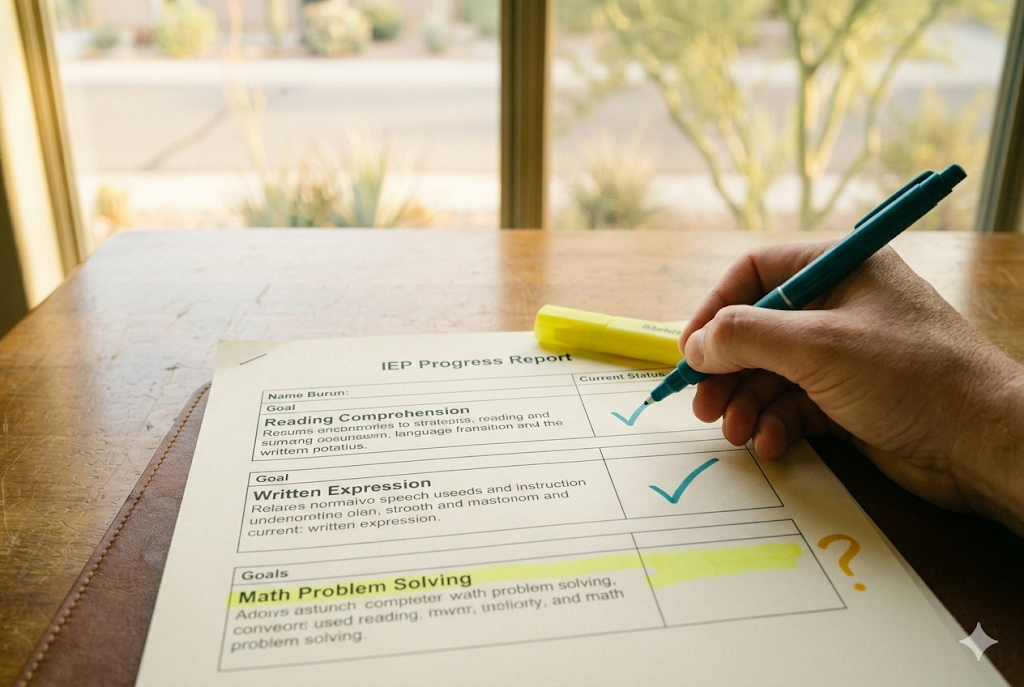
Start With Last Year’s Progress Reports
Before you think about the new year, you need an honest accounting of where the old one ended. Pull the end-of-year progress reports on each of your child’s IEP goals. Read them carefully. For each goal, note whether it was met, still in progress, or not met. The answers tell you several things that matter for fall planning.
Goals that were met are worth celebrating and worth reporting accurately at the next IEP meeting. They are also evidence that the right supports were in place. Goals that were not met, despite a full year of services, raise a legitimate question: was the goal itself appropriate, or were the services or implementation inadequate? Goals still in progress need to be evaluated against how much time is left before the IEP is due for its annual review.
If you don’t have progress reports, request them now before the school closes. They should be in your hands before the new year begins.
Review the Current IEP Before Fall Meetings Start
Read the current IEP from beginning to end. Not the goals section only. All of it, including the present levels of academic achievement and functional performance, the service summary, the accommodation list, and any supplementary aids and services.
As you read, note anything that no longer reflects your child accurately. Children change. A present level description written in January may not be accurate in September, especially if there has been significant progress, regression, or a new diagnosis. A service summary that references providers who have since left the district is out of date and may affect implementation. An accommodation list that doesn’t include supports your child has since been found to need is incomplete.
You do not need to wait for the annual review meeting to request an IEP amendment if the current document has significant inaccuracies. You can request a meeting or even propose written amendments to update specific sections. Going into the new year with an accurate document is worth the administrative effort.
Find Out Who Your Child’s Team Will Be in the Fall
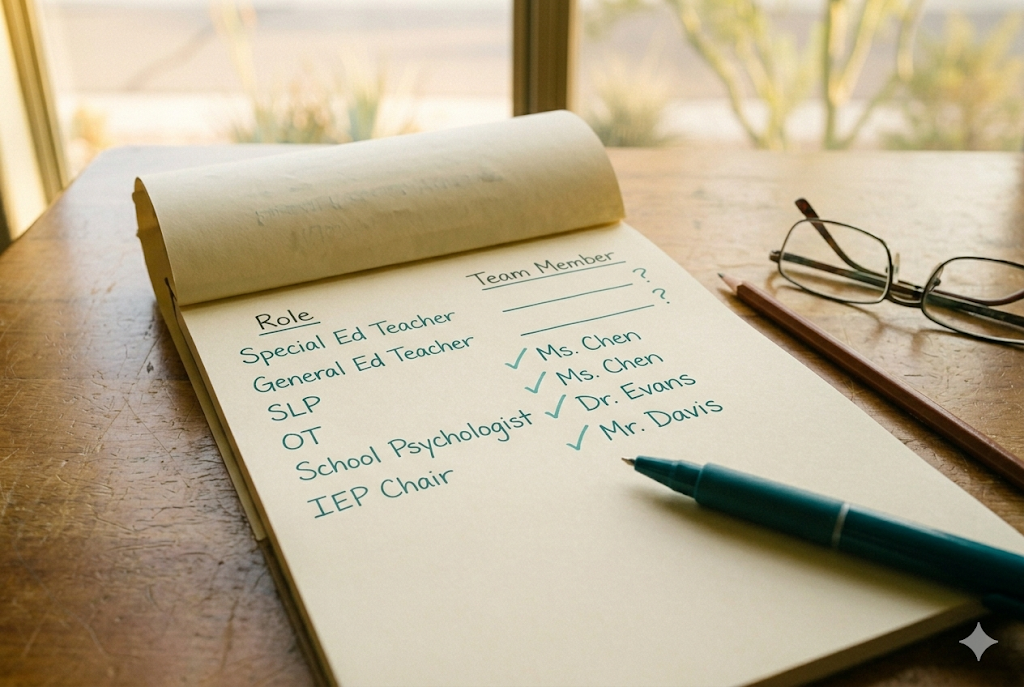
This is the question most parents don’t think to ask until August, and by then it’s too late to address it before the year starts. Case manager assignments, classroom placements, and related service provider schedules are typically finalized before the summer ends. Request this information in writing before school closes.
Ask specifically: who will be your child’s case manager in the fall? Who will provide each related service? Is there continuity from last year, or will your child be working with new providers? If there is a significant change in the team, what is the plan for transferring knowledge about your child’s needs, communication style, and what works?
If you have a specific concern about a placement or a provider change, summer is a more productive time to raise it than August when the school year is already underway. A placement concern raised in July can often be resolved before the first day of school. The same concern raised in mid-August puts your child in a position where they are already in the wrong setting while the dispute is being sorted out.
Document the Summer Thoughtfully
If your child is not receiving ESY services and you are concerned about regression over the summer, now is the time to establish a baseline. Before school ends, ask your child’s service providers for current data on the skills and goals they are tracking. Speech-language benchmarks, reading fluency levels, behavioral baselines, or fine motor skills data gives you an objective starting point.
Over the summer, note any significant changes you observe. You do not need to run formal assessments. Parent observation, notes from any private therapy or tutoring, and informal assessments you conduct at home all have value as data. If your child regresses significantly over the summer, that data supports an argument for either ESY in future years or enhanced services in the fall to address regression.
If your child does have ESY services, keep your own record of attendance, whether services were delivered as scheduled, and any concerns you observe during the ESY period. This runs parallel to the district’s records and is important if there are any discrepancies later.
Prepare for the Fall IEP Meeting Before It’s Scheduled
Fall IEP meetings for annual reviews are often scheduled quickly, sometimes with limited notice to parents. If you arrive at the meeting without preparation, the meeting often moves in a direction set by the school team. If you arrive prepared, you are a full participant in the decisions being made.
Preparation means knowing the answers to these questions before you walk in.
- Which goals were met last year and which were not?
- Which services are working well and which need adjustment?
- Are there any new concerns that have emerged and need to be added to the plan?
- Does the placement still make sense for where your child is now?
- Are there any outside evaluations or private provider reports that should be shared with the team?
- Is ESY eligibility something you want to discuss?
- Are there changes in your child’s needs related to a new diagnosis, medication, or significant life event?
You can also request that specific items be added to the meeting agenda in advance. If you want the team to discuss a particular goal, service, or concern, you can email the case manager before the meeting and request that it be included. This is a reasonable request and puts your items on the table from the start rather than as an afterthought.
Consider an Independent Evaluation If You Have Lingering Questions
Summer is an ideal time to pursue an independent educational evaluation if you have concerns about whether the district’s assessment accurately reflects your child’s needs. Private evaluations from neuropsychologists, speech-language pathologists, or educational specialists can take several months from referral to final report. Starting the process in June means you may have results available before the fall IEP meeting.
An independent evaluation is your right under IDEA. If the district conducted an evaluation and you disagree with its findings, you can request an IEE at public expense. Even if you are seeking a private evaluation not covered by this right, having current, independent data in hand before the fall meeting strengthens your position when negotiating goals, services, and placement.
Frequently Asked Questions About Fall IEP Preparation
When does the new IEP need to be in place for fall?
What if my child is transitioning to a new school in the fall?
Can I request an IEP meeting over the summer?
Should I share private evaluation results with the school team before the fall meeting?
How do I ask for services to be increased in the fall IEP?
What if my child has changed significantly over the summer and the current IEP no longer fits?
The Parents Who Walk In Prepared Win More
I have been in hundreds of IEP meetings on both sides of the table. The single biggest variable in whether a meeting goes well is not how aggressive or accommodating the school team is. It is how prepared the parent is. A parent who knows the data, knows what they want to advocate for, and knows their rights is a participant. A parent arriving cold to a meeting full of professionals is a bystander.
Summer is the time to become the first kind of parent. It does not require a law degree. It requires time, organization, and knowing where to start.
If you would like help reviewing your child’s current IEP, evaluating end-of-year progress reports, or preparing for a fall meeting that involves complex services or a placement concern, I am glad to work through it with you. A consultation over the summer is far less stressful than a crisis in October.
Reach me at 480.973.3553 or through the contact page. I look forward to helping you walk into fall ready.