
If you have been lying awake wondering whether your child needs more help than the classroom is giving them, you are already doing the most important thing a parent can do. You are paying attention. The short answer is this: you can request an IEP evaluation in writing the moment you suspect a disability is affecting your child’s learning, and in Arizona the school then has 15 school days to respond. Should the team agree to evaluate, the 60 calendar day timeline begins once your written consent is provided. You do not have to wait for the school to bring it up, and you do not need a medical diagnosis first.
I work with families across Phoenix and Scottsdale who waited a full school year because they thought they needed permission to ask. They did not. The right time to ask is when the worry starts, not when the report card finally confirms it.
The Short Answer: You Can Ask Now
Under a part of federal special education law called Child Find, your school district has an ongoing duty to identify and evaluate any child who may have a disability. That duty does not wait for you. But you do not have to wait either. A written request from you starts the clock and creates a record.
The reason for putting this request in writing matters is simple. A verbal request to a teacher in a hallway can be forgotten or lost. A phone call with an administrator or counselor can be misrepresented. When you put your request in writing, the school is required to respond, and that response has to come through a formal notice rather than a casual conversation.
Signs It May Be Time to Request an Evaluation
You know your child better than any test does. Still, certain patterns tend to signal that classroom support alone is not enough. Watch for these:
- Your child is falling behind in reading, writing, or math despite extra help at home or in class
- Homework that should take 20 minutes turns into an hour of tears most nights
- Your child is bright in conversation but cannot show it on paper or on tests
- Behavior is escalating at school, or your child is being sent home or disciplined often
- Your child has stopped wanting to go to school, or says they feel stupid
- A teacher has mentioned concerns more than once but no formal plan has followed
One or two hard weeks happen to every child. A pattern that lasts a grading period and does not improve with ordinary support is different. That pattern is worth acting on. If you want a fuller list, my guide to special education warning signs walks through what to track and how.
When to Ask for an IEP Versus a 504 Plan

Parents often get stuck here, and I understand why. The two plans sound similar and the acronyms blur together. The difference comes down to what your child needs.
An IEP provides specialized instruction, which means the teaching itself is changed to fit how your child learns. A 504 plan provides accommodations, which means the environment or the rules are adjusted while the instruction stays the same. A child who needs to be taught reading in a different way needs an IEP. A child who simply needs extra time on tests or a seat near the front may be served by a 504 plan.
You do not have to decide which one your child needs before you ask. That is what the evaluation determines. If you are weighing the two, my breakdown of IEP versus 504 plans in Arizona lays out where each one fits.
How to Request an IEP Evaluation in Arizona
Keep it simple. Your written request does not need legal language. It needs to be clear, specific, and dated.
A strong request does three things. It states plainly that you are requesting a full and individual special education evaluation due to a suspected disability. It names the concerns you are seeing, in your own words. And it is dated and saved, so you have a record of when the clock started.
Send it to the school principal and the special education coordinator, and ask for confirmation that they received it. After you give written consent, the school must give you a document called Prior Written Notice (PWN) if it either agrees to evaluate or refuses to. That notice has to explain the decision, which protects you from a vague brush-off. The acknowledgement of your written request, and the PWN, must be sent within 15 school days.
What Happens After You Ask: The Arizona Timeline
Should the team agree to evaluate, you as the parent must provide written consent. Once you sign written consent for the evaluation, Arizona gives the school 60 calendar days to complete the evaluation and hold the meeting that determines whether your child qualifies. That meeting brings together the people who assessed your child, and it is where eligibility is decided.
Sixty calendar days can feel long when your child is struggling right now. It helps to know what is happening inside that window so you can tell whether the school is on track. My Arizona special education evaluation guide walks through each step, and my explanation of what a MET is covers the team that makes the eligibility decision.
What the Evaluation Will Actually Look At
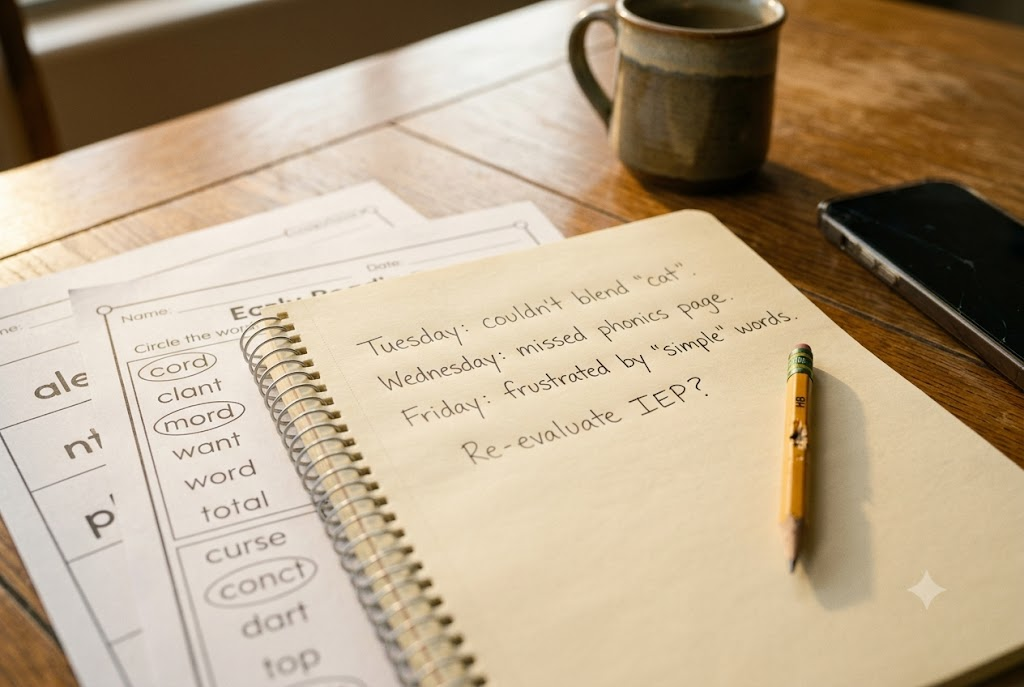
A full evaluation is not a single test. It is a picture of your child built from several angles, and you have the right to know what is being assessed before it happens.
Depending on your concerns, the team may look at academic skills, cognitive ability, speech and language, fine and gross motor skills, social and emotional functioning, and how your child pays attention and manages behavior. The law requires the school to assess in all areas of suspected disability, not just the one that is most obvious.
This is why the wording of your request matters. If you only mention reading, the school may only look at reading. If you describe the full picture, including the anxiety at drop-off or the meltdowns over homework, the evaluation has to account for all of it. Name everything you are seeing, even the parts that feel unrelated.
You are also a member of the evaluation team. Your observations about how your child functions at home are information the school is required to consider, not background noise.
What If the School Says No?

Sometimes a school declines to evaluate. When that happens, it cannot simply say no and
move on. It has to give you Prior Written Notice explaining why it refused, what information it relied on, and what options you have.
That notice is your opening, not a dead end. You have the right to disagree, to provide your own information, and to challenge the decision. You do not have to accept a refusal at face value, and you are not out of moves.
Why Waiting Usually Costs More Than Asking
The instinct to wait and see is understandable. No parent wants to overreact, and schools sometimes suggest giving it one more semester. But for a child who is genuinely struggling, time is rarely neutral.
Skills build on skills. A child who misses the foundation in early reading does not stand still while the class moves on. They fall further behind, and the gap gets harder to close each year. The same is true for behavior and anxiety that go unsupported. What looks manageable in October can become a refusal to attend school by spring.
Asking for an evaluation does not commit you to anything. It does not force services on your child or attach a label. It gets you information, and information is what turns a worried guess into a clear plan. If the evaluation shows your child does not qualify, you have lost nothing and gained certainty. If it shows they do qualify, you have gained a year you would otherwise have spent waiting.
Frequently Asked Questions
Can I request an IEP evaluation at any time?
Yes. You can request an evaluation in writing at any point during the school year. You do not have to wait for a parent-teacher conference or for the school to suggest it first.
How long does the school have to evaluate my child in Arizona?
Arizona rules give the school 60 calendar days from the date you provide written consent to complete the evaluation and determine eligibility. The clock starts when you sign consent, not when you first raise a concern.
Do I need a diagnosis before I ask for an IEP?
No. A private medical diagnosis can be helpful information, but it is not required. The school must evaluate when there is reason to suspect a disability is affecting your child’s access to learning.
What if I am not sure whether my child needs an IEP or a 504 plan?
Request the evaluation first. The results tell you whether your child qualifies for an IEP, a 504 plan, or another form of support. You are not expected to know the answer before you ask.
What should my written request say?
State that you are requesting a full special education evaluation, describe the specific concerns you are seeing, and date the letter. Send it to the principal or special education coordinator, and keep a copy. Sending the letter via email is suggested.
You Do Not Have to Navigate This Alone
If your gut is telling you something is not working for your child, that instinct deserves a real answer, not another semester of waiting. I have spent more than 25 years helping Arizona families ask the right questions at the right time and hold schools to the timelines the law requires.
If you want help deciding whether to request an evaluation, or you want someone in your corner once you do, call me at 480.973.3553 or email alison@stoneeac.com. I am here to make sure your child gets the support they are entitled to.
If you are not sure which path fits your situation, or you are weighing due process and want a clear-eyed read on the case, call me at 480.973.3553 or email alison@stoneeac.com. I work with Phoenix and Scottsdale families through every dispute resolution path, and the choice between them matters more than most parents realize.