


You did everything right. You put your concern in writing, you asked for an evaluation, and the answer came back: no. That word can feel like a door slamming, especially when you can see your child struggling every single day. Here is what you need to know first: a denial is not the end of the road. The school cannot simply refuse and walk away. It must give you a formal document called a Prior Written Notice (PWN) explaining its decision, and you have several clear options to challenge it, including requesting an independent evaluation, filing a state complaint, or using mediation.
I have walked many Arizona families through this exact moment. The denial feels final. It is not. It is the start of a different process, and you have more power in it than the school’s “no” suggests.
First, Get the Denial in Writing
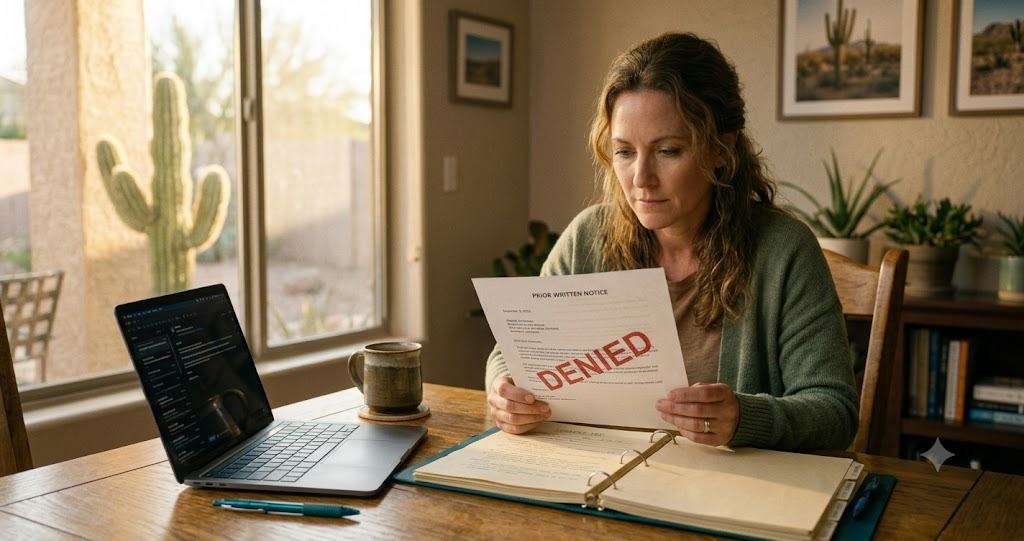
When a school refuses to evaluate or to provide services, it is legally required to provide you a Prior Written Notice (PWN). This is not optional and it is not a courtesy. It is a document, mandated by law, that must explain what the school refused, why it refused, what information it used to make the decision, and what your rights are.
If you received a verbal no, or a vague email, ask for the PWN directly. Put that request in writing, too. The notice matters because it forces the school to commit its reasoning to paper, and that reasoning is exactly what you will examine and challenge.
Why Schools Deny Requests
Understanding the reason behind a denial helps you respond to it. Schools rarely deny a request out of indifference. More often, the denial comes from budget constraints, high caseloads, or a genuine belief that the existing classroom data does not yet show a need.
Sometimes the school says your child is “doing fine” because grades look acceptable, even though you can see the hours of nightly struggle behind those grades. Sometimes the school wants to try classroom interventions first. None of these reasons removes your right to push back. They simply tell you what evidence you need to bring to the next conversation.
Gather the Evidence That Answers the Denial
A denial usually rests on a specific claim: not enough data, grades are fine, or the classroom interventions have not been tried long enough. Your most effective response answers that specific claim with evidence.
Think about what would counter the school’s stated reason. If the school says there is not enough data, a private evaluation from an outside psychologist or therapist can fill that gap. If the school says your child is doing fine, a folder of work samples, failing quizzes, or a log of nightly homework battles tells a different story. If a teacher has expressed concern in an email, that email is evidence, too.
You do not need all of it, and you do not need it to be perfect. You need enough to make the school’s reason hard to defend. Bring the evidence to a follow-up meeting or attach it to a written request for reconsideration. A denial built on “we do not see a need” gets much weaker when you put the need in front of them in writing.
Your Options When the Answer Is No

You are not limited to a single path. Depending on the situation, you can pursue any of these, sometimes more than one at the same time:
- Ask the team to reconsider with additional information, such as a private evaluation or your own documented observations
- Request an independent educational evaluation at public expense if you disagree with the school’s evaluation
- File a state complaint with the Arizona Department of Education
- Request mediation, a voluntary process with a neutral third party
- File for a due process hearing, the most formal option
The right choice depends on whether the dispute is about a refusal to evaluate, a disagreement with an evaluation that was done, or a failure to provide services. Let’s look at the two options parents reach for most.
Option: Request an Independent Educational Evaluation
If the school evaluated your child and you disagree with the result, you have the right to ask for an independent educational evaluation, often shortened to IEE. This is an evaluation done by a qualified professional who does not work for the school district.
When you request an IEE at public expense, the school must either pay for it or file for a due process hearing to defend its own evaluation. It cannot simply ignore the request. This is one of the strongest tools a parent has, and it is underused because most families do not know it exists. My full guide to requesting an independent educational evaluation in Arizona walks through who qualifies, who pays, and how to use the result.
Option: File a State Complaint or Use Dispute Resolution
If the issue is a clear violation, such as the school missing a required timeline or refusing to follow its own process, a state complaint to the Arizona Department of Education is often the most efficient route. You generally have up to one year from the violation to file, and the state investigates and issues findings.
For disagreements that are less about a clear rule and more about what your child needs, mediation or a due process hearing may fit better. My breakdown of due process versus mediation in Arizona explains which path suits which situation, and my guide to what to do when the school is ignoring your child’s IEP covers enforcement once a plan is in place.
What If You Disagree With an Evaluation the School Did

Not every denial is a refusal to evaluate. Sometimes the school does evaluate your child, then concludes they do not qualify or that their needs are smaller than you know them to be. This is a different situation, and it has its own tool.
When the school has completed an evaluation and you disagree with it, that disagreement is exactly what triggers your right to an independent educational evaluation at public expense. You are not stuck with a result you believe is wrong. The independent evaluator looks at your child with fresh eyes, and their findings carry real weight in the next conversation.
If the school’s evaluation missed an area, tested in a way that did not fit your child, or reached a conclusion that does not match what you see every day, do not simply accept it. A disagreement on paper is the start of your next move, not the end of the road.
Document the Denial and Your Response
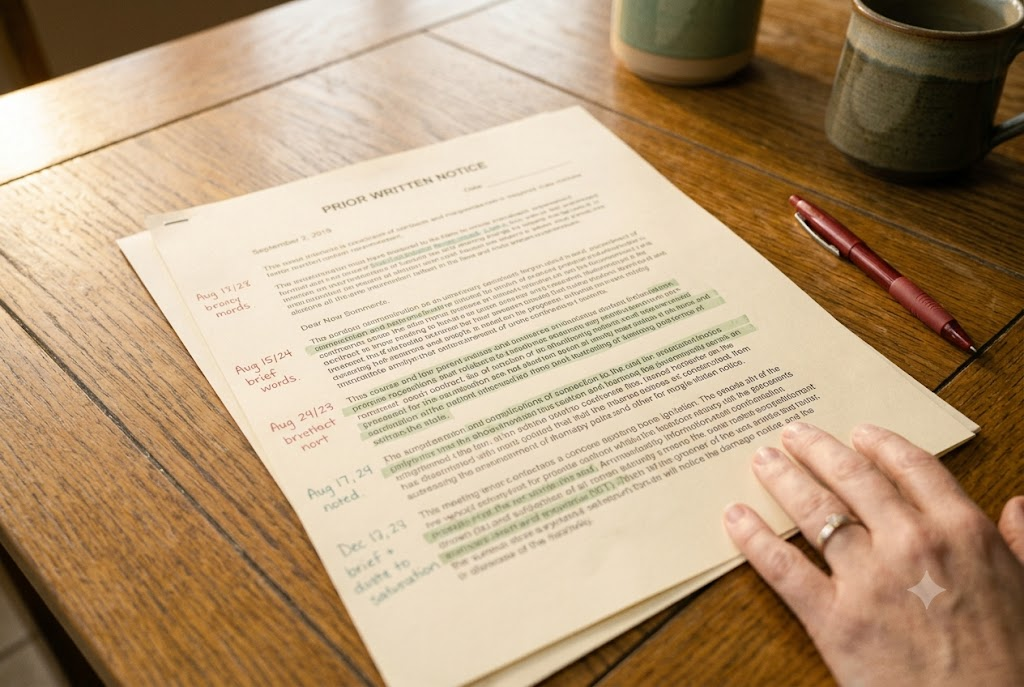
From the moment of the denial, keep a clean record. Save the Prior Written Notice (PWN), your original request, and every email that follows. Note dates on everything.
This record does more than organize your thoughts. If you end up in mediation or a hearing, the timeline of who said what and when becomes the backbone of your case. A parent who can show a clear, dated sequence is in a far stronger position than one relying on memory.
How Fast Should You Act?
Quickly, but not frantically. Respond to a denial in writing within a few days rather than a few weeks. Acting promptly preserves your timelines, keeps the pressure on, and signals that you intend to follow through.
At the same time, a strong response is better than a fast one. Take the time to gather the evidence that answers the school’s stated reason for the denial. A week spent assembling a private evaluation or a record of your child’s struggles is rarely wasted.
Frequently Asked Questions
Can a school refuse to evaluate my child?
A school can decline an evaluation request, but it cannot do so silently. It must give you a PWN explaining why and the information it relied on, and you have the right to challenge that decision through several routes.
What is prior written notice?
A Prior Written Notice is a formal document the school must provide when it proposes or refuses to evaluate, identify, or change your child’s placement or services. It has to explain the decision, the reasons, and your rights as a parent.
What is an independent educational evaluation?
An IEE is an evaluation conducted by a qualified examiner who does not work for the school district. If you disagree with the school’s own evaluation, you can request an IEE at public expense, and the school must either pay for it or defend its evaluation through due process.
How do I file a complaint in Arizona?
You can file a state complaint with the Arizona Department of Education, generally within one year of the alleged violation. You may also request mediation or file for a due process hearing, depending on the nature of the dispute.
How quickly should I respond to a denial?
Respond promptly and in writing, ideally within a few days. Acting quickly protects your timelines, but make sure your response is backed by the evidence that answers the school’s stated reason.
You Have More Options Than the School’s “No” Suggests
A denial is one of the most discouraging moments a parent faces, and it is designed to feel final. It is not. With the right next step, families turn a no into an evaluation, a service, or a plan more often than they expect.
I have spent more than 25 years helping Arizona parents respond to denials and hold districts to the law. If your school has told you no and you are not sure what comes next, call me at 480.973.3553 or email alison@stoneeac.com. Let’s figure out your strongest next move together.