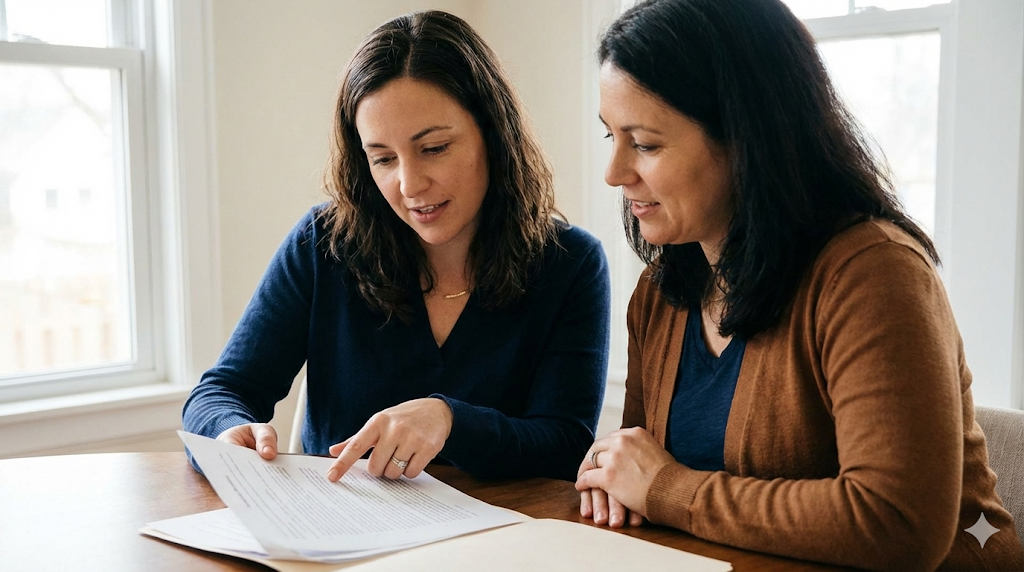
I’ve sat at the school’s table. I know how they think, what arguments they make, and what they’re banking on you not understanding.
As a special education advocate who spent 25 years in Arizona schools—as a teacher, coordinator, and administrator—I’ve watched countless parents walk into IEP meetings feeling completely lost, armed with a stack of school district paperwork full of acronyms and legal language that might as well be written in code.
Here’s what I learned on the other side of that table: Most schools don’t deliberately hide their language behind jargon. But the effect is the same—parents feel overwhelmed, uncertain, and less likely to push back when something doesn’t sound right.
I’m not here to be polite for the sake of being polite. I’m here to make sure you walk into that meeting knowing exactly what these terms mean, why they matter to your child, and what you can do about them.
The Foundation: What Is FAPE and Why It’s Non-Negotiable
Let’s start with the cornerstone of everything in special education: FAPE — Free Appropriate Public Education.
This isn’t just an acronym. It’s a legal guarantee.
FAPE means your child is entitled to special education services at no cost to your family, tailored to their individual needs, and designed to help them make meaningful progress in school. Not just any progress. Meaningful progress. That’s the distinction schools sometimes try to blur.
I’ve heard schools say things like, “Well, your child is making progress in that area, just not at the same rate as peers.” That’s not FAPE if the education isn’t actually appropriate for your child’s needs.
FAPE covers more than just academics, too. It includes speech therapy, occupational therapy, counseling, behavioral support, and any other services your child needs to access and benefit from education. If your child can’t sit still because of anxiety or ADHD, and the school isn’t providing support for that, the education isn’t appropriate—even if the curriculum itself is solid.
Child Find: The School’s Obligation to Look for Your Child

Here’s something most parents don’t realize: Schools aren’t just supposed to wait around for you to say, “My child needs help.”
Child Find is an active obligation under the Individuals with Disabilities Education Act (IDEA). It means schools have to be actively looking for children who might have disabilities and could benefit from special education services. Teachers are trained to watch for signs. Administrators are supposed to have systems in place to catch kids who are struggling but whose parents haven’t yet made a formal request.
In Arizona, schools are required to identify, locate, and evaluate all children with disabilities, regardless of whether a parent has asked. That includes kids in private schools, homeschooled students, and students who are homeless.
Why does this matter? Because if your child is clearly struggling and the school hasn’t suggested an evaluation, they may not be meeting their Child Find obligation. You can hold them accountable for that.
Red flags that Child Find isn’t working at your school: A child with obvious learning difficulties who’s never been referred for evaluation, or years passing without screening for eligibility.
Informed Consent: More Than Just Signing a Form
Informed Consent sounds like bureaucratic jargon, but it’s actually your protection.
Informed Consent means the school must get your written permission before doing anything significant in your child’s special education process. That includes conducting evaluations, starting services, or changing your child’s IEP. But—and this is crucial—”informed” has teeth. You can’t truly consent to something you don’t understand.
I’ve seen schools hand parents consent forms with zero explanation and say, “Just sign here.” That’s not Informed Consent. Informed Consent means the school has to explain what they’re doing, why, what it means for your child, and what the alternatives are. You should be able to ask questions and get real answers.
When you see that consent form, you have every right to say, “I don’t understand what I’m signing. Walk me through this.” And they must comply.
This is especially important during evaluations. Evaluating for ADHD is very different from evaluating for autism spectrum disorder, which is different from evaluating for a specific learning disability. Make sure you know what they’re actually testing for and why.
Prior Written Notice: Your Right to Know What’s About to Change

Prior Written Notice is the school’s obligation to tell you in writing before they change anything about your child’s special education program. And I mean anything: new goals, different services, a different classroom placement, changes to accommodations.
The notice has to include:
- What the school is proposing to do
- Why they’re proposing it
- How it affects your child
- What other options you considered
- Your procedural safeguards (we’ll get to those)
Why this matters: It creates a paper trail. It forces the school to actually think through their decisions instead of making changes on a whim. It gives you time to object before something happens. And if you later disagree with the decision, you have documentation of what was proposed and why.
If a school wants to remove your child from a general education classroom, reduce their services, or move them to a different program, Prior Written Notice must come first. If it doesn’t, that’s a violation of your child’s rights.
Procedural Safeguards: Know Your Rights
Procedural Safeguards are the protections that exist to make sure the special education process is fair and that your rights are respected.
These aren’t suggestions. They’re legal protections. Procedural Safeguards include:
- Your right to access your child’s school records
- Your right to bring someone to IEP meetings to support you
- Your right to request an independent educational evaluation (IEE) if you disagree with the school’s evaluation
- Your right to file a formal complaint if you believe the school has violated your child’s rights
- Your right to mediation or due process hearings
Schools are required by law to give you the Procedural Safeguards Notice at least once per year, and also upon request. If you don’t have a copy, ask for it. It should be in plain language and include information specific to Arizona.
One thing I’ve noticed: Many parents get the notice and never read it. I get it—it’s a long, dense document. But it’s one of the most powerful tools you have.
IEP: The Individualized Education Program
An IEP — Individualized Education Program — is the legal document that outlines all the special education services, accommodations, goals, and support your child will receive. It’s created during an IEP meeting where you, your child’s teachers, the school psychologist, and other relevant specialists come together.
The IEP should be truly individualized to your child. It shouldn’t be a template with a few blanks filled in. If your child’s IEP looks a lot like every other kid’s in the school, that’s a red flag.
A solid IEP includes:
- Present levels of academic and functional performance (what your child can and can’t do now)
- Parent Input (your opportunity to share what is happening ‘behind the scenes’)
- Measurable annual goals that are actually challenging but achievable
- Special education services (frequency, duration, location)
- Related services like speech therapy, occupational therapy, or counseling
- Accommodations and modifications
- Transition services (for students 16 and older)
- Least Restrictive Environment (LRE) placement
I’ve sat through IEP meetings where schools propose vague goals like “improve reading skills” with no specifics about how much improvement or over what timeframe. That’s not measurable. Push back. Your child’s goals should be specific enough that you can actually track progress.
504 Plan: When Your Child Needs Accommodations but Not Special Education
A 504 Plan is different from an IEP. It’s a civil rights protection that applies to students who have a disability (as defined under Section 504 of the Rehabilitation Act) that substantially limits a major life activity, but who don’t qualify for special education under IDEA.
A 504 Plan provides accommodations and modifications to help your child access general education. Examples include extended time on tests, breaks during the day, a modified workload, preferential seating, or use of assistive technology.
The key difference: An IEP provides special education services and instruction. A 504 Plan provides accommodations within the general education setting.
I’ve seen schools tell parents, “Your child doesn’t qualify for an IEP, so there’s nothing we can do.” That’s incorrect. A 504 Plan is absolutely something. It’s a legal accommodation plan backed by federal law.
LRE: Least Restrictive Environment
The Least Restrictive Environment (LRE) principle is this: Your child should be educated alongside peers without disabilities to the maximum extent appropriate. Not all day, necessarily, but as much as possible.
This doesn’t mean all kids belong in general education full-time. Some kids need resource rooms or specialized instruction. But the default should be inclusion, with removal only when the child can’t benefit from general education even with accommodations and supports.
I’ve seen schools use “emotional and behavioral disorder” classifications as an excuse to pull kids out of general ed for most of the day. Sometimes that’s necessary. Often, it’s a lack of creativity or willingness to provide proper supports in the mainstream setting.
BIP and FBA: Behavioral Support Systems
If your child has behavioral challenges, you’ll hear about a BIP — Behavior Intervention Plan — and possibly an FBA — Functional Behavior Assessment.
An FBA is the detective work: the school observes and analyzes your child’s behavior to understand what’s triggering it and what function it serves (is the child seeking attention? Avoiding a task? Trying to self-regulate?). From that information, they develop a BIP—a plan to address the underlying need and teach better behavior.
A good FBA and BIP should never be about punishment. They should be about understanding why your child is behaving that way and teaching them better skills. Preventing behaviors is the goal – not punitive measures.
IEE: Independent Educational Evaluation
If you disagree with the school’s evaluation results, you have the right to request an Independent Educational Evaluation (IEE) at public expense.
This means the school has to pay for an outside evaluator to assess your child. You and the school can’t just go back and forth forever—there are rules and timelines—but this is a real right, not just something schools mention in passing.
ESY and Transition Services: Planning for the Long Term
ESY stands for Extended School Year (sometimes called summer school for special education). If your child’s needs are significant enough, they may be eligible for ESY services to prevent regression during the summer break. There are many creative ways to provide ESY services.
Transition Services are required for students 16 and older (Arizona allows districts to start at 14). These services are supposed to help your student prepare for life after school: job skills, independent living skills, higher education, community access. Too many schools treat transition services as a checkbox instead of actual planning. Don’t let yours.
Arizona-Specific Context: Knowing Your State’s Landscape
Arizona’s special education system is run through the Arizona Department of Education (ADE), but individual districts have different approaches and funding levels. Maricopa County districts vary widely in their resources and how aggressively they defend parents’ rights.
Some Arizona schools are responsive and collaborative. Others are defensive and overly legalistic. Knowing which one you’re dealing with helps you adjust your approach.
Also know this: Arizona’s budget situation affects special education services. When the state cuts funding, districts make choices about what services to prioritize. That’s not an excuse for denying FAPE, but it’s context for why you might need to be more assertive than you expected.
The Bottom Line: Knowledge Is Power
I’ve seen families transform their child’s education simply by understanding these terms and knowing their rights. They walk into meetings differently. They ask better questions. They know when something doesn’t add up.
Schools count on parents not understanding the system. When you do understand it, everything changes.
If you’re facing an IEP meeting soon, or you’re trying to figure out whether your child needs an evaluation, or you just want someone to walk through these terms with you in the context of your specific situation, I’m here.
You don’t need a law degree to advocate for your child. But you do need to know the language they’re speaking.
Reach out to Stone Educational Advocacy & Consulting:
- Email: alison@stoneeac.com
- Phone: 480.973.3553
Let’s make sure your child gets what the law says they’re entitled to receive.