I need to have a direct conversation with you about something that keeps me up at night.
Every week, I talk to Arizona parents who are considering the Empowerment Scholarship Account (ESA) program for their child with special needs. They’ve heard it’s a way to get their child into private school. They’ve heard it provides funding for therapies. They’ve been told it gives them “choice.”
What they usually haven’t been told is what they’re giving up.
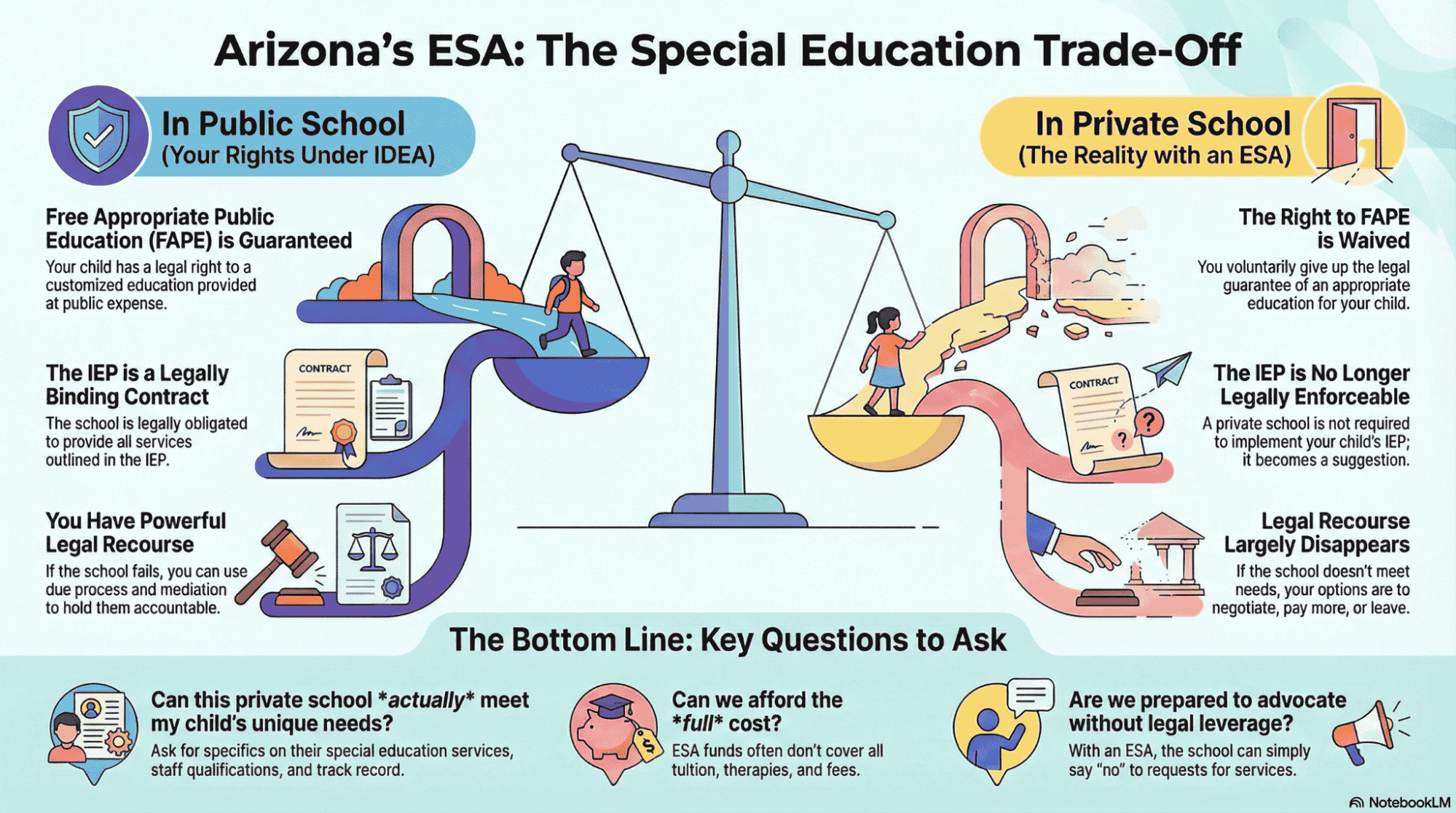
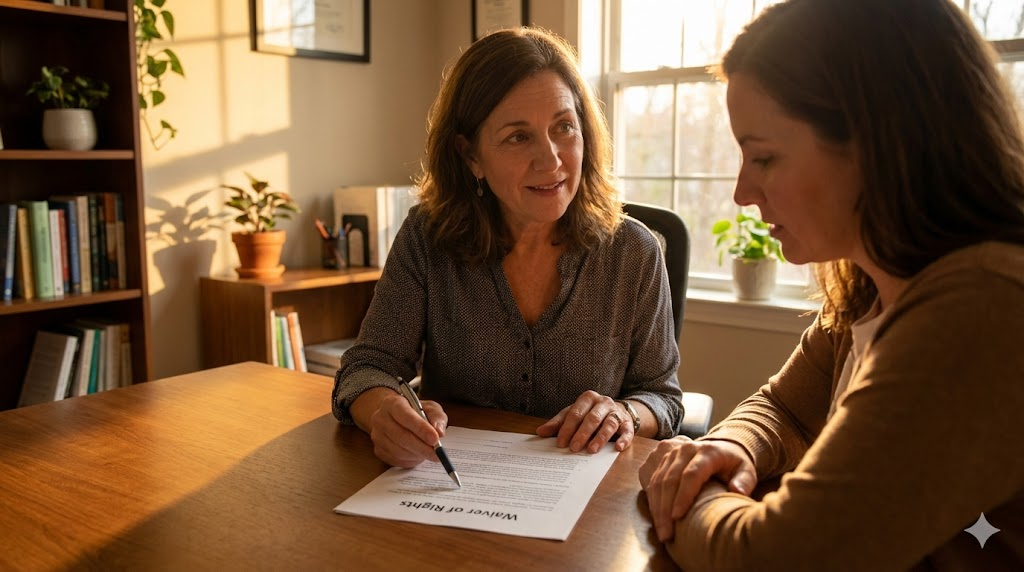
When you accept ESA money for private school, you are voluntarily waiving your child’s right to a Free Appropriate Public Education and nearly all of the legal protections under IDEA.
I’m not saying the ESA is never the right choice. For some families, it absolutely is. But I’ve worked with too many parents who made this decision without fully understanding the trade-off, and by the time they realized what they’d lost, their child was struggling in a private school with no legal recourse to get help.
So let’s talk about what you’re actually choosing between.
What Is Arizona’s ESA Program?
The Empowerment Scholarship Account program, administered by the Arizona Department of Education, provides public funds that families can use for education outside traditional public schools.
For students with disabilities, this money can be used for:
- Private school tuition
- Therapies (occupational therapy, physical therapy, speech therapy, ABA)
- Curriculum and educational materials
- Tutoring services
- Certain transportation costs
- Uniforms and fees
The amount you receive is based on a portion of what the state would have spent on your child in public school. Parents manage the account and must track expenditures according to ADE guidelines.
Who Qualifies?
Students with disabilities typically qualify for an ESA if they have:
- A current or previous Individualized Education Program (IEP)
- A 504 Plan
- A Multidisciplinary Evaluation Team (MET) report
- An Independent Educational Evaluation (IEE) that documents a disability
The Arizona Department of Education reviews applications and determines eligibility.
What Your Child Has in Public School
Before we talk about what changes with an ESA, let’s be crystal clear about what your child currently has in public school under IDEA.
Free Appropriate Public Education (FAPE)
Your child has the legal right to an education designed to meet their unique needs, provided at public expense. The school must provide whatever specialized instruction and related services your child needs to make meaningful progress.
A Legally Binding IEP
Your child’s Individualized Education Program isn’t just a plan. It’s a legal document. The school is obligated to implement it. If they don’t, you have legal recourse.
Comprehensive Services
Your child is entitled to whatever services they need: specialized instruction, speech therapy, occupational therapy, physical therapy, counseling, psychological services, assistive technology, transportation, and more. These services are provided at no cost to you.
Procedural Safeguards
You have powerful legal protections:
- The right to participate in all decisions about your child’s education
- Prior Written Notice before any changes to your child’s services or placement
- The right to consent (or refuse consent) for evaluations and services
- The right to an Independent Educational Evaluation at public expense if you disagree with the school’s evaluation
- “Stay Put” rights that keep your child’s services in place during disputes
- Due process hearings where you can challenge school decisions before an impartial hearing officer
- Mediation to resolve disagreements
Regular Review and Accountability
Your child’s IEP must be reviewed at least annually. Your child must be reevaluated at least every three years. The school must report on progress toward IEP goals. They are legally accountable for implementing what’s in the IEP.
What You Give Up with an ESA
Now here’s the part that doesn’t make it into the glossy brochures.
You Waive FAPE
When you accept an ESA, you are voluntarily waiving your child’s right to a Free Appropriate Public Education. Let me say that again: you are giving up your child’s legally guaranteed right to an appropriate education.
Private Schools Are Not Bound by IDEA
Private schools that accept ESA students are generally not required to follow IDEA. They are not legally obligated to implement your child’s IEP. They are not required to provide FAPE.
That IEP you worked so hard to develop? It has no legal force in a private school setting.
Your Legal Recourse Disappears
In public school, if the district refuses to provide what your child needs, you can file for due process. You can go to mediation. You can file a state complaint. You have legal tools to hold them accountable.
In private school with an ESA? Those tools largely disappear. If the private school isn’t meeting your child’s needs, your options are to negotiate, pay for additional services yourself, or leave.
No Guaranteed Services
Private schools can decide what services they’re willing to provide. They’re not required to offer speech therapy, occupational therapy, or any other related service. They can say “we don’t do that” and there’s no law requiring them to change.
Considering an ESA? Let’s talk about what you’d be giving up.
What Protections Remain
It’s not all or nothing. Some protections do remain, though they’re much more limited.
Proportionate Share Services
Your public school district is required to set aside funds for limited special education services for students whose parents have placed them in private schools. However:
- These services are determined by the district, not by individual IEPs
- They’re typically group services, not individualized
- The scope is much more limited than what’s available in public school
- You have to seek them out; they’re not automatically provided
Section 504 and ADA Protections
Some private schools may be subject to Section 504 of the Rehabilitation Act or the Americans with Disabilities Act, which prohibit discrimination based on disability. These laws may require reasonable accommodations.
However: Section 504 and the ADA do not require FAPE. They do not require IEP implementation. They provide much weaker protections than IDEA.
The Right to Return
This is important: you can always go back. If you accept an ESA and it doesn’t work out, you can re-enroll your child in public school and all IDEA rights and FAPE protections are reinstated.
But here’s the reality: returning isn’t seamless. Your child may need to be reevaluated. A new IEP will need to be developed. There’s often a transition period where services aren’t fully in place. And your child has lost whatever time they spent in a setting that wasn’t meeting their needs.
The Real Questions You Need to Answer

If you’re considering an ESA, here’s what I want you to think through carefully.
Can This Private School Actually Meet Your Child’s Needs?
Private schools are not required to admit students with disabilities. They’re not required to serve them if they do admit them. Many private schools simply don’t have the expertise, staff, or resources to support students with significant special needs.
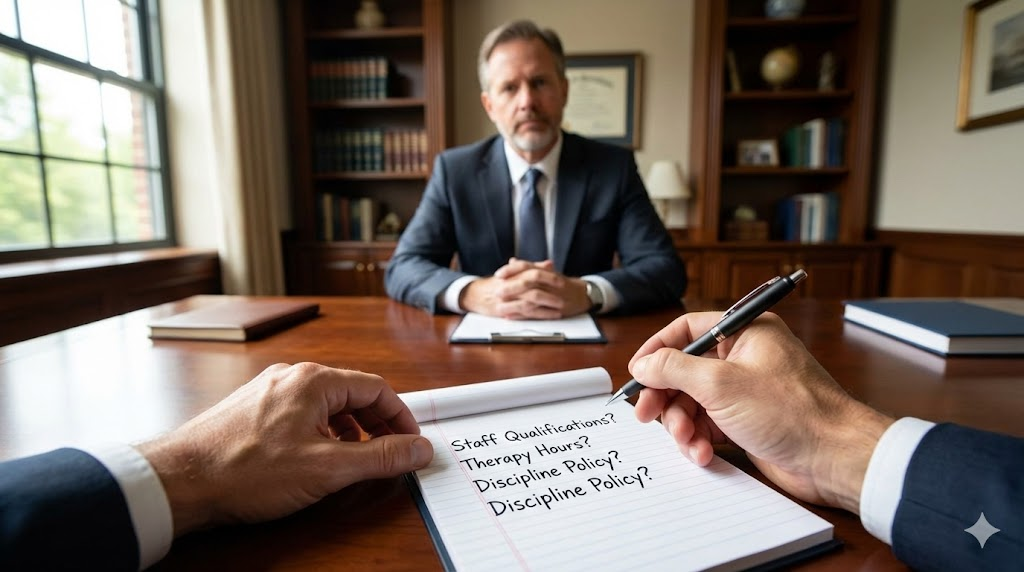
Before you accept an ESA, you need honest answers to these questions:
- What specific special education services does this school provide?
- What are the qualifications of staff who will work with my child?
- Has this school successfully served students with similar needs to my child?
- What happens if my child needs more support than they’re currently providing?
- How will progress be measured and communicated?
- What is the process if I have concerns about my child’s education?
Get answers in writing. Vague assurances aren’t enough.
Can You Afford the Full Cost?
ESA funds often don’t cover everything. Be prepared for:
- Tuition that exceeds your ESA amount
- Therapies and services not included in tuition
- Transportation costs
- Materials, uniforms, and fees
- Private evaluations and assessments
Calculate the real total cost, not just the sticker price. Can you sustain this financially for the years your child needs it?
What If It Doesn’t Work?
Have a backup plan. What will you do if the private school doesn’t work out? How quickly can you get your child back into public school? What will happen during the transition?
Are You Comfortable Without Legal Recourse?
This is the big one. In public school, if things go wrong, you have legal tools. With an ESA, you don’t. Are you prepared to advocate for your child without the backing of IDEA? Are you comfortable with a situation where the school can simply say “no” and you have no legal leverage?
When an ESA Might Make Sense
I’m not anti-ESA by any means. For some families, it’s the right choice. It might make sense if:
- Your child’s needs can genuinely be met by a specific private school that has demonstrated expertise
- Your public school options have truly failed despite good-faith advocacy
- You have the financial resources to supplement ESA funding if needed
- You’re comfortable advocating without legal mandates backing you up
- The private school has a track record of successfully serving students with similar needs
- You’ve done thorough due diligence and have realistic expectations
When an ESA Probably Doesn’t Make Sense
I’d encourage you to think twice if:
- You’re choosing private school primarily to escape a difficult situation without a clear plan for what comes next
- The private school doesn’t have specific expertise in your child’s disability
- You’re relying on vague promises about “accommodations” without specifics
- The ESA funds won’t cover the full cost and you’re stretching financially
- Your child has significant needs that require legally mandated services
- You haven’t exhausted your options for advocacy in the public school system
Before You Decide: What I Want You to Do
1. Understand What You’re Giving Up
Read this article again. Make sure you really understand what IDEA protections you’re waiving. This isn’t a scare tactic; it’s informed consent.
2. Research the Private School Thoroughly
Don’t rely on marketing materials. Talk to parents of students with disabilities who attend. Ask hard questions about services, qualifications, and track record. Get commitments in writing.
3. Do the Math
Calculate the true cost, including everything not covered by the ESA. Make sure you can sustain this long-term.
4. Talk to Someone Who Knows the System
This is a complex decision with long-term implications. Talking to a special education advocate or attorney before you decide can help you understand what you’re choosing between.
5. Don’t Make This Decision Under Pressure
Don’t let anyone rush you. Don’t accept an ESA because you’re frustrated with your current situation and want something to change immediately. Make this decision with clear eyes and full information.
The Bottom Line
The ESA program gives Arizona families an option. Options can be good. But this particular option comes with a trade-off that many parents don’t fully understand until it’s too late.
You are trading legally guaranteed rights for financial support and choice. That might be the right trade for your family. But you need to make that trade with your eyes open.
If you’re considering an ESA for your child with special needs, I strongly encourage you to talk to someone who can help you think through the implications before you sign anything.
Have questions about how an ESA would affect your child’s rights? Call me at 480.973.3553. I can help you understand what you’d be giving up, evaluate whether a specific private school can meet your child’s needs, and make sure you’re making this decision with full information. This is too important to get wrong.
Frequently Asked Questions
What is the Arizona ESA program?
The Empowerment Scholarship Account (ESA) program provides public funds for eligible Arizona families to use for education outside traditional public schools. The money can be used for private school tuition, therapies, curriculum, tutoring, and other approved educational expenses.
Are IEP rights lost with an Arizona ESA?
Yes. Accepting an ESA typically means voluntarily waiving your child’s right to Free Appropriate Public Education (FAPE) and most protections under IDEA. Private schools are generally not bound by IDEA and are not legally required to implement IEPs or provide FAPE.
What special education rights are retained with an ESA?
Families may access proportionate share services from public districts (though these are limited), and some private schools may be subject to Section 504 and ADA protections (though these don’t require FAPE or IEP implementation). You always retain the right to re-enroll in public school and reinstate full IDEA protections.
Can I return to public school if the ESA doesn't work out?
Yes. You can always re-enroll your child in public school, and all IDEA rights and FAPE protections will be reinstated. However, your child may need to be reevaluated and a new IEP developed, which takes time.
Do private schools have to follow my child's IEP?
No. Private schools accepting ESA students are not legally required to implement IEPs. Any services or accommodations they provide are at their discretion or as negotiated with parents, not legally mandated.
What questions should I ask a private school before accepting an ESA?
Ask about specific special education services offered, staff qualifications, track record with students who have similar needs, how progress is measured, what happens if your child needs more support, and the dispute resolution process. Get answers in writing.
How do I know if an ESA is right for my child?
Consider whether the specific private school can genuinely meet your child’s needs, whether you can afford all costs not covered by the ESA, whether you’re comfortable advocating without legal protections, and whether you’ve fully explored options within the public school system. Consulting with a special education advocate can help you think through this decision.
Alison Stone is a COPAA-certified special education advocate with over 25 years of experience helping Arizona families navigate special education decisions. At Stone Educational Advocacy & Consulting, she helps parents understand their rights, evaluate educational options, and make informed decisions about their children’s education.
Considering an ESA for your child with special needs? Call 480.973.3553 or email alison@stoneeac.com before you make this decision. I can help you understand exactly what you’re choosing between and whether a specific private school can truly meet your child’s needs.