If you’re a Phoenix parent with a child on an IEP, you’ve probably seen alarming headlines about special education changes coming in 2026. Maybe you’ve heard whispers about IDEA being restructured, funding being cut, or IEPs being eliminated altogether.
I want to cut through the noise and give you the facts, because right now there’s a lot of confusion about what’s actually changing versus what’s being proposed. And as someone who’s been advocating for Arizona families for over 25 years, I can tell you: the real changes happening in our state deserve your attention, even if they’re not making national headlines.
Let me break down what you actually need to know and what you should be doing right now to protect your child’s IEP.
Federal vs. State: Understanding What’s Really Changing

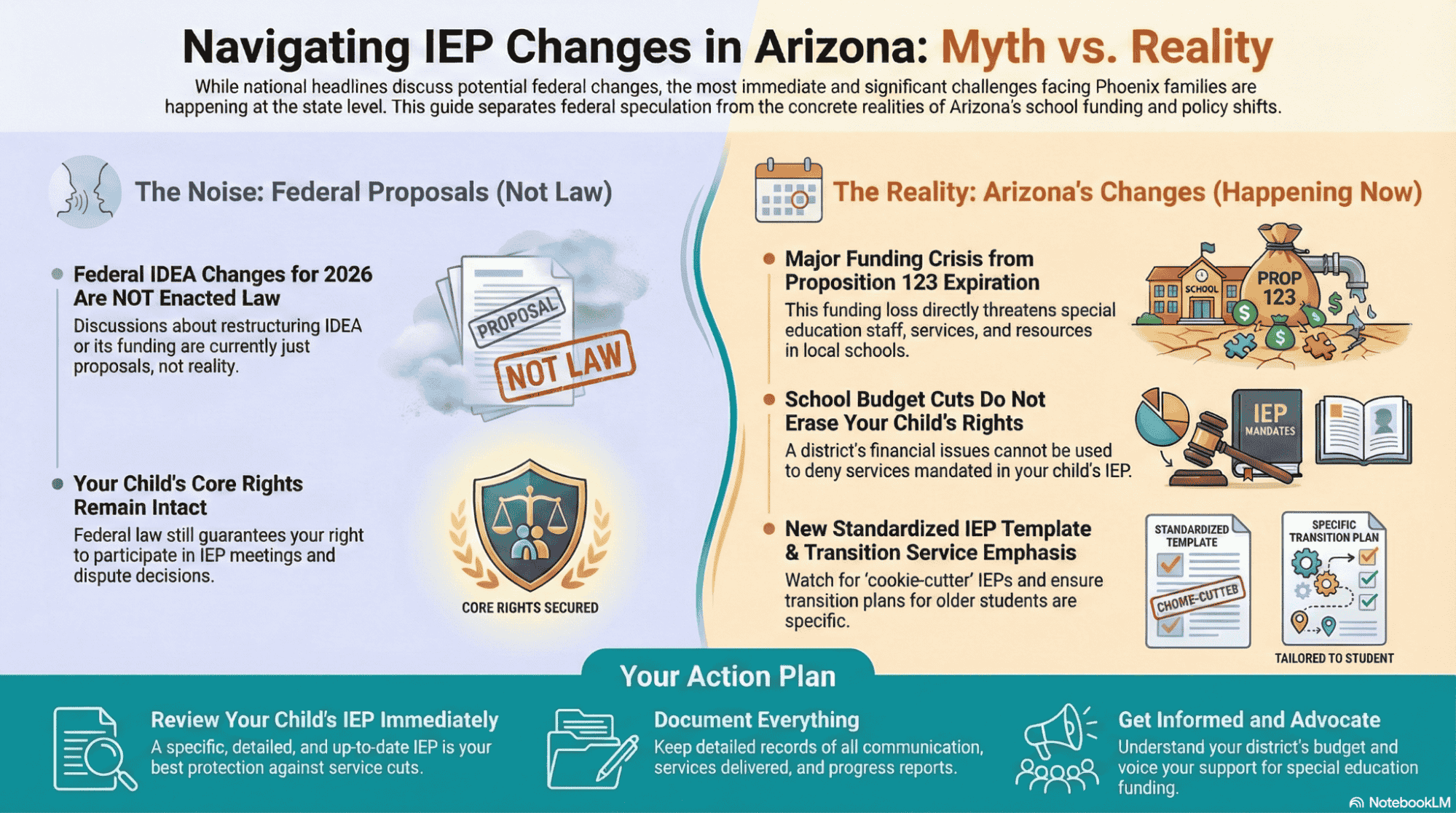
Here’s the most important thing I need you to understand: no statutory federal changes to IDEA have been enacted for 2026.
Yes, there are proposals being discussed. Yes, some of them are concerning. But proposals are not law. Your child’s rights under IDEA remain intact as of today.
That said, there are real changes happening at the state level in Arizona that will directly affect your child’s IEP. These deserve your attention far more than speculation about federal proposals.
What’s Being Proposed at the Federal Level
Let me be clear about what’s in the discussion phase, not the law phase:
IDEA reauthorization discussions: There’s ongoing conversation about reauthorizing and potentially restructuring IDEA, but nothing has been enacted.
Department of Education proposals: Some policy proposals suggest restructuring or reducing the U.S. Department of Education, which could affect how IDEA is enforced. These are proposals, not reality.
Funding model changes: Discussions include potential shifts to block grants or other funding mechanisms. Again, proposals only.
Project 2025 suggestions: You may have heard about this initiative’s proposals for education, including special education. These are policy recommendations from a think tank, not enacted legislation.
The bottom line: keep an eye on these discussions, but don’t panic about proposals that haven’t become law.
What’s Actually Changing in Arizona
Now let’s talk about what IS happening, because this is where you need to focus your energy.
Proposition 123 Expiration: The Funding Crisis Coming to Phoenix Schools
Here’s the change that will likely affect your child most directly: Proposition 123 expired in June 2025.
This measure provided significant funding to Arizona public schools, including special education programs. Its expiration means a substantial loss of revenue for Phoenix-area school districts.
What This Means for Your Child’s IEP
The funding shortfall from Prop 123’s expiration could lead to:
- Reduced special education staffing. Fewer aides, specialists, and support staff.
- Limited related services. Speech therapy, occupational therapy, counseling, and other services may face cuts.
- Delayed evaluations. Schools may take longer to complete evaluations when they’re understaffed.
- Larger caseloads. Special education teachers managing more students means less individualized attention.
- Resource limitations. Less funding for assistive technology, specialized materials, and programs.
I want to be direct with you: some Phoenix-area districts are already making difficult budget decisions. And when budgets get tight, special education often takes the hit.
What You Need to Remember
Budget constraints don’t change your child’s legal rights. If your child’s IEP says they receive specific services, they’re entitled to those services regardless of the district’s financial situation. The school’s budget problems are not permission to reduce your child’s legally mandated services.
If you start hearing “we can’t afford that anymore” or “we’re restructuring due to funding,” that’s your signal to get very specific about what’s in your child’s IEP and what the law requires.
Phoenix parent with IEP concerns?
Arizona’s Standardized IEP Template
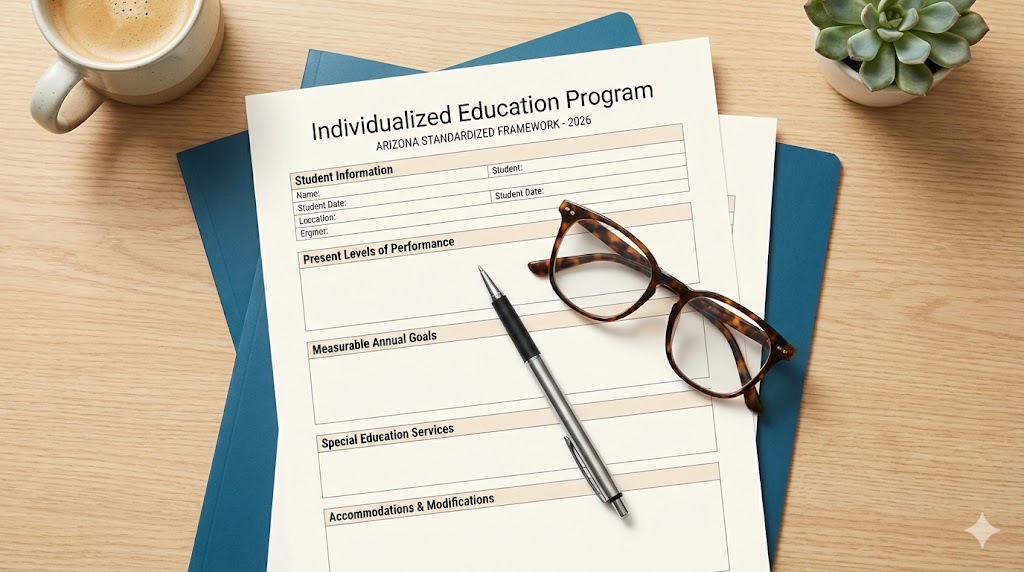
The Arizona Department of Education is implementing a standardized IEP template across the state. This is designed to create consistency and clarity in how IEPs are written.
The Good News
A standardized template can make IEPs more understandable and ensure all required components are included. It may also make it easier to transfer between Arizona districts since everyone will be using the same format.
What to Watch For
Standardization doesn’t mean your child’s IEP should become generic. The template is a framework, but the content must remain individualized to your child’s specific needs.
If you notice your child’s IEP becoming more “cookie-cutter” or less specific to their unique situation, speak up. A standardized template should improve clarity, not reduce individualization.
Transition Services: New Emphasis for Older Students

Arizona is placing renewed emphasis on transition services for students with IEPs who are approaching adulthood. If your child is 16 or older (or approaching that age), this affects you.
What’s Changing
There’s a push for transition services to be:
- More specific and measurable
- Clearly tied to post-secondary goals
- Actively involving the student in planning
- Connected to real-world outcomes for education, employment, and independent living
What You Should Do
If your child is in high school or approaching transition age:
- Make sure transition goals are specific, not vague
- Ensure your child is actively participating in IEP meetings
- Ask about connections to community resources, vocational training, and post-secondary options
- Don’t accept generic transition language that doesn’t reflect your child’s actual goals and abilities
Your IEP Rights in 2026: What Hasn’t Changed
Let me reassure you about what remains constant. Your core rights under IDEA are not changing:
Right to participate: You are an equal member of the IEP team, and no decisions should be made without your input.
Prior Written Notice: The school must notify you in writing before proposing any changes to your child’s identification, evaluation, placement, or services.
Consent: The school needs your written consent for evaluations and initial placement.
Independent Educational Evaluation: If you disagree with the school’s evaluation, you can request an independent evaluation at public expense.
Dispute resolution: You have the right to mediation, state complaints, and due process hearings if you disagree with the school’s decisions.
Access to records: You have the right to review all educational records related to your child.
These rights are enshrined in federal law and remain in effect regardless of budget pressures or policy discussions.
What Phoenix Parents Should Do Right Now
Don’t wait for changes to happen to you. Here’s what proactive parents are doing:
1. Review Your Child’s Current IEP
Pull out your child’s IEP and read it carefully. Ask yourself:
- Are the Present Levels of Academic Achievement and Functional Performance (PLAAFP) current and accurate?
- Are the annual goals specific and measurable?
- Are all services clearly defined with frequency, duration, and location?
- Are accommodations and modifications appropriate?
- Is the placement still the least restrictive environment for your child?
If anything is vague, outdated, or doesn’t reflect your child’s current needs, request an IEP meeting to update it. A strong, detailed IEP is your best protection against cuts and changes.
2. Request an IEP Review Before the School Year
You have the right to request an IEP meeting at any time. Don’t wait for the annual review if you have concerns. A proactive review now can ensure your child’s IEP is robust and compliant before any budget pressures hit.
3. Document Everything
Start keeping detailed records if you aren’t already:
- Maintain copies of all IEP documents, evaluations, and progress reports
- Log all communication with the school (dates, who you spoke with, what was discussed)
- Follow up verbal conversations with an email summarizing what was agreed upon
- Track whether services are actually being delivered as written in the IEP
- Note any concerns about quality or consistency of services
4. Understand Your District’s Situation
Pay attention to your school district’s budget discussions. Attend school board meetings if you can. Know what financial pressures your district is facing and how they’re planning to address them.
Being informed about your district’s situation helps you anticipate potential issues before they affect your child.
5. Build Relationships Now
The time to build good relationships with your child’s teachers, case manager, and service providers is before there’s a crisis. People are more likely to advocate for your child and find creative solutions when they know you and have a working relationship with you.
6. Connect with Other Parents
You’re not alone in this. Connect with other parents of children with disabilities in your area. Share information, support each other, and consider collective advocacy when appropriate.
Organizations like Parent Support Arizona and the Arizona Center for Disability Law can provide resources and support.
7. Advocate at the Local Level
If you’re concerned about special education funding in your district:
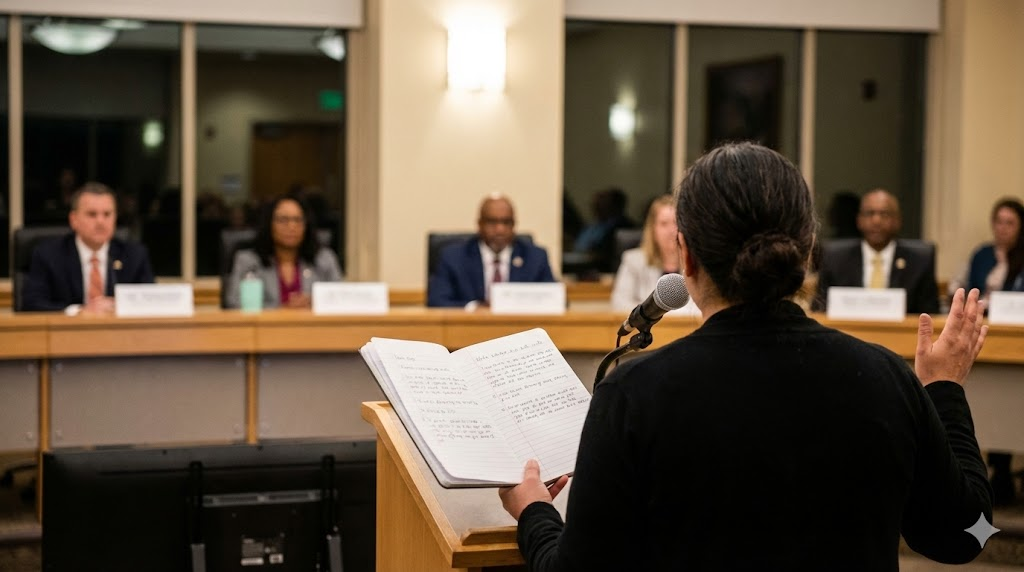
- Attend school board meetings and speak during public comment
- Contact your local school board members
- Reach out to state legislators
- Support local funding initiatives
Your voice matters. School boards and legislators need to hear from parents about the importance of special education funding.
When to Get Help
Navigating special education during times of change and budget pressure isn’t easy. Consider reaching out for support if:
- You’re getting pushback from the school about services
- Your child’s IEP seems to be getting less specific or comprehensive
- You’re being told services need to be cut due to funding
- You’re not sure whether proposed changes to your child’s IEP are appropriate
- You’re facing an IEP meeting and want someone in your corner
- You’re confused about your rights or what the changes mean for your child
Having an advocate who knows the law and understands the local landscape can make a significant difference, especially when schools are under pressure.
The Bottom Line
Yes, there are changes coming that could affect your child’s special education services. But here’s what I want you to take away:
Your child’s rights under IDEA haven’t changed. The law still requires schools to provide a Free Appropriate Public Education. The law still requires them to follow your child’s IEP.
The real changes happening are at the state level. Prop 123’s expiration is affecting Arizona school budgets right now. That’s where your attention should be focused.
Federal proposals are not federal law. Keep an eye on discussions, but don’t panic about things that haven’t happened.
A strong IEP is your best protection. The more specific and well-documented your child’s IEP is, the harder it is for schools to chip away at services.
You have more power than you think. Your voice matters in IEP meetings, at school board meetings, and with legislators.
I’ve been advocating for Arizona families through budget crises, policy changes, and political shifts for over 25 years. One thing has remained constant: informed, proactive parents get better outcomes for their children.
Have questions about how these changes affect your child’s IEP? Call me at 480.973.3553 for a free consultation. I can help you review your child’s IEP, prepare for upcoming meetings, and make sure your child’s rights are protected.
Frequently Asked Questions
What are the proposed IDEA changes for 2026?
No statutory federal changes to IDEA have been enacted for 2026. Current discussions include potential restructuring of the Department of Education, changes to funding models, and alterations to enforcement priorities. These are proposals and policy discussions, not current law.
Will IEPs be eliminated in 2026?
No. IEPs are a core mandate of IDEA, and there is no enacted legislation eliminating them. Don’t let rumors or speculation convince you otherwise. Your child’s right to an IEP remains protected under federal law.
How does Proposition 123's expiration affect special education in Phoenix?
Prop 123 provided significant funding to Arizona public schools. Its expiration in June 2025 creates budget shortfalls that could lead to reduced staffing, limited related services, delayed evaluations, and resource limitations in special education programs. However, budget constraints don’t change your child’s legal entitlements under IDEA.
What is Arizona's standardized IEP template?
The Arizona Department of Education is implementing a standardized IEP template for consistency across districts. While this can improve clarity, parents should ensure the content remains individualized to their child’s specific needs rather than becoming generic.
What are my IEP rights as a parent in Phoenix in 2026?
Your core rights under IDEA remain unchanged: participation in IEP meetings, Prior Written Notice before changes, consent for evaluations and placement, the right to Independent Educational Evaluations, access to dispute resolution, and the right to review all educational records.
Can I request an IEP review before the school year starts?
Absolutely. You can request an IEP meeting at any time, not just at the annual review. A proactive review before the 2025-2026 school year can ensure your child’s IEP is robust and current before any budget pressures take effect.
What are transition services and why are they being emphasized?
Transition services are coordinated activities that help students with IEPs prepare for post-secondary education, employment, and independent living. Arizona is emphasizing that these services (required starting at age 16) should be specific, measurable, and actively involve the student in planning.
What should I do to prepare for 2026 special education changes?
Review your child’s current IEP for completeness and accuracy. Request an IEP meeting if updates are needed. Document all communications with the school. Stay informed about your district’s budget situation. Connect with other parents and advocacy groups. Consider working with a special education advocate if you’re facing challenges.
Alison Stone is a COPAA-certified special education advocate with over 25 years of experience helping Phoenix and Scottsdale families navigate the special education system. At Stone Educational Advocacy & Consulting, she helps parents understand their rights, prepare for policy changes, and ensure their children receive the services they’re legally entitled to.
Concerned about how 2026 changes will affect your child’s IEP? Call 480.973.3553 or email alison@stoneeac.com for a free consultation. I can help you review your child’s IEP and develop a plan to protect their educational rights.